

Core Insights Review • Last Updated: June 15, 2026
The construction industry in 2026 is no longer cautiously experimenting with technology — it is actively rebuilding itself around it. Faced with persistent labor shortages, economic volatility, and aggressive sustainability mandates, contractors and developers are embracing AI, robotics, modularization, and integrated data platforms at unprecedented scale.
In this article
- AI and automation become core infrastructure
- Modular construction and prefabrication scale up
- Digital twins & BIM integration go mainstream
- Robotics and autonomous equipment expand
- Sustainability and smart green technologies
- Data integration & advanced analytics
- The bigger picture: data centers & tech acceleration
- Labor shortages remain the biggest catalyst
- The rise of the "hybrid builder"
Key Takeaways
- The construction industry may need between 349,000 and 500,000 additional workers in 2026 to meet demand.
- Deloitte warns labor shortages could put nearly $124 billion in construction output at risk.
- AI is moving from experimentation to operational deployment, with workflow automation and predictive analytics becoming top investment priorities.
- Digital twins can reduce rework by up to 40% while improving project visibility.
- Modular construction is shortening project schedules by 30%–50% in high-growth sectors such as data centers.
- Robotics adoption is accelerating as contractors seek productivity gains amid persistent labor shortages.
- Sustainability is increasingly driven by measurable performance rather than compliance alone.
Construction's 2026 Technology Shift, By the Numbers
Firms Planning AI Expansion Across Departments
Companies Investing in Industrial AI
Net New Workers Needed in 2026
Rework Reduction From Digital Twins
1. AI and Automation Become Core Infrastructure
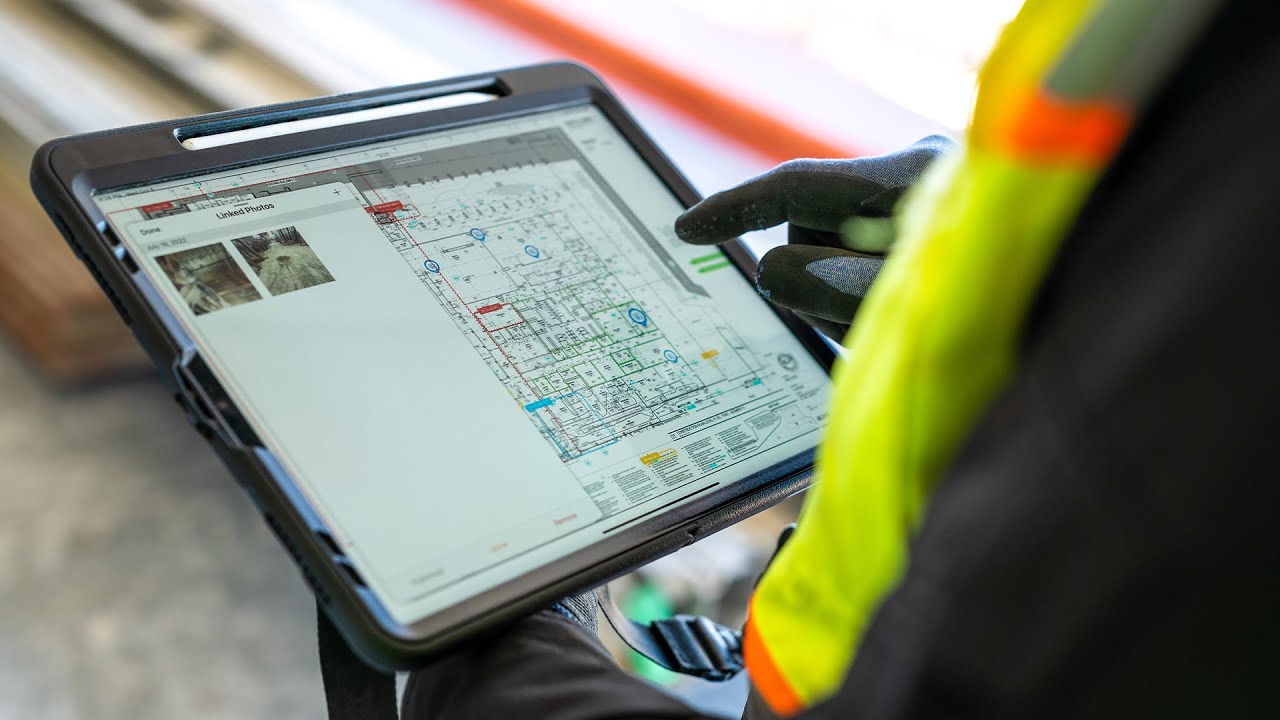
Artificial Intelligence has evolved from pilot programs into what many firms now call "digital crew members."
Agentic AI systems are increasingly embedded into scheduling, procurement optimization, safety monitoring, and cost forecasting. Platforms like Procore have predicted the rise of AI agents that function as real-time assistants for superintendents and project managers.
Application of AI & Automation: Example From China
On a live jobsite in early 2026, a superintendent reportedly used an AI assistant at 5:30 AM to instantly retrieve technical specifications from complex construction drawings — eliminating manual document searches. This isn't theoretical; it's operational reality.
In China, AI-powered "smart sites" integrate drones, IoT sensors, and predictive analytics to:
- Deliver real-time safety alerts
- Predict equipment failures
- Reduce on-site workforce needs by up to 50% on select projects
A furnace robot in one Chinese project improved efficiency by 20% within five days, cutting labor costs by 5%.
According to surveys by Trimble Inc. of 1,800+ contractors, AI-driven workflow automation and predictive analytics rank among the top investment priorities in 2026.
AI Investment Moves Beyond Pilot Projects
Market forecasts suggest the global AI-in-construction market could exceed $6 billion in 2026 and continue growing at more than 24% annually through the early 2030s.
Recent surveys indicate that contractors increasingly view AI as a productivity tool rather than an experimental technology. Bluebeam research found that approximately 27% of AEC professionals were actively using AI tools by late 2025, while 94% of current users planned to increase adoption during 2026.
The next phase of AI deployment is expected to focus on interconnected agent ecosystems that automate scheduling adjustments, identify project risks, manage documentation, and support resource allocation in real time.
AI Adoption Momentum in Construction
Figure 1. AI adoption is moving rapidly from pilot projects to enterprise-wide deployment across the construction sector.
Why this matters: With nearly a quarter of the current workforce expected to retire over the next decade, AI is no longer optional — it is structural.
➡️ Also read: 6 PropTech Trends Driving Real Estate ROI in 2026
2. Modular Construction and Prefabrication Scale Up
Modular construction and prefabrication are expanding rapidly as owners demand faster delivery, cost certainty, and reduced environmental impact.
Experts like Kassem Ben Abid of BESIX note a "significant increase in modular construction and prefabrication solutions."
Application of Modular Techniques
Modular techniques are increasingly applied in:
- Data centers (where speed-to-market is critical)
- Museums and heritage facilities (where minimizing on-site disruption is essential)
Digital 3D modeling ensures clash-free designs before fabrication begins, reducing rework and compressing schedules.
With global construction growth projected at 6–7% annually through 2030, modularization is becoming a primary strategy to handle demand without proportional labor increases.
Data Centers Are Accelerating Modular Adoption
Few sectors illustrate the benefits of modular construction better than data centers. Because speed-to-market directly affects revenue generation, developers increasingly rely on modular electrical rooms, prefabricated mechanical systems, and factory-built infrastructure components.
"Highly modular projects can reduce delivery schedules by 30%–50%, allowing facilities that once required 24–36 months to be completed in as little as 16–20 months."
As data center construction continues expanding globally, modularization is becoming a strategic requirement rather than a niche construction method.
3. Digital Twins & BIM Integration Go Mainstream

Digital twins are moving from innovation labs to jobsite standard practice.
By linking Building Information Modeling (BIM) with real-time schedules, cost data, field progress updates, and IoT sensor feeds, contractors can reduce rework by up to 40%.
Swathi Kottali of Yates Construction predicts digital twins will soon become standard governance tools across major projects.
From Design Tool to Operational Platform
The digital twin market is projected to reach approximately USD 3.4 billion in 2026 and continue expanding at a CAGR exceeding 27%.
Historically used during design and planning phases, digital twins are increasingly being deployed across the full asset lifecycle — from construction monitoring to predictive maintenance and operational optimization. Industry case studies have reported:
- Energy savings of 15% or more
- Water leak reductions between 10% and 15%
- Improved structural monitoring and risk management
- Faster issue detection and corrective action
As owners demand greater visibility into asset performance, digital twins are evolving into long-term operational platforms rather than temporary project tools.
Data Insight
Over 60% of IT leaders in construction are launching data consolidation initiatives to support BIM and IoT integration — signaling that fragmented systems are being replaced with unified digital ecosystems.
In China's infrastructure and skyscraper projects, BIM-integrated planning enables virtual simulations before physical construction begins — significantly reducing risk exposure.
Digital Twin Performance Improvements
Figure 2. Digital twins are delivering measurable improvements in project execution, operational efficiency, and asset performance.
4. Robotics and Autonomous Equipment Expand Rapidly
With an estimated 500,000 additional workers needed in 2026, robotics adoption is accelerating.
Autonomous heavy equipment is improving grading precision and reducing costs. For example, Built Robotics reported self-operating excavators reducing grading costs by 30% in 2025 pilot projects, with expanded scaling in 2026.
In China, bricklaying robots place over 1,000 bricks per hour, and rebar-tying machines eliminate repetitive manual tasks.
Judd Fuoto of Southland Industries anticipates "greater adoption of robotics and automation to keep up with demand."
Robotics Adoption Reaches Critical Mass
Robotics adoption is accelerating beyond pilot deployments. Industry benchmarks indicate that approximately 46% of construction firms now report using some form of robotics or automated equipment. Beyond autonomous excavators, emerging technologies include:
- Layout robots
- Autonomous surveying systems
- Rebar-tying robots
- Construction exoskeletons
- Concrete and building-component 3D printing
The goal is not workforce replacement but workforce augmentation — allowing skilled labor to focus on higher-value activities while repetitive and hazardous tasks are automated.
Strategic implication: Robotics are not replacing skilled labor — they are compensating for structural shortages while improving safety in hazardous tasks.
➡️ Also read: PropTech Global Market Trends in 2026: How Technology Is Humanizing and Transforming Real Estate
5. Sustainability and Smart Green Technologies
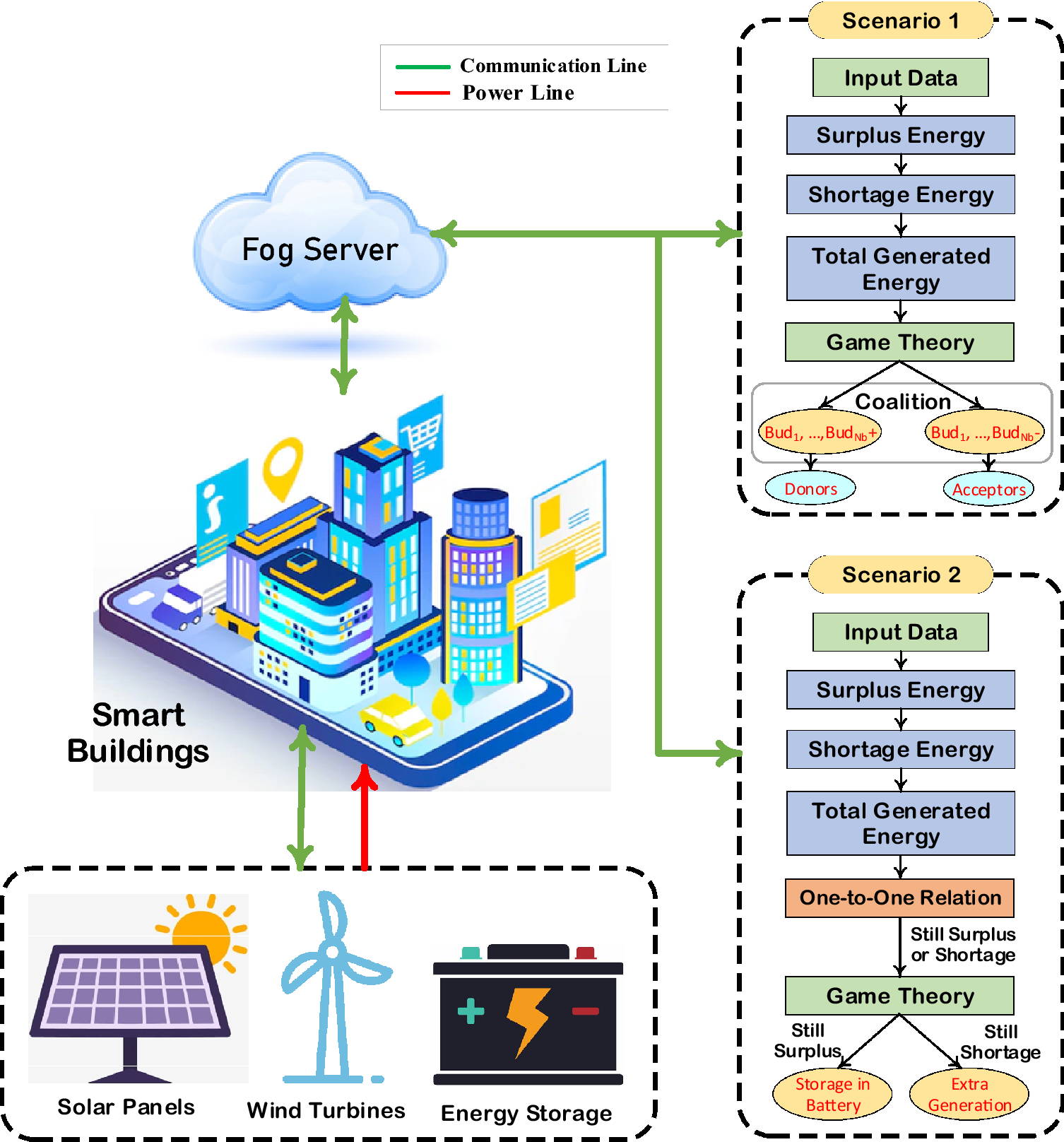
Sustainability in 2026 is performance-driven, not symbolic. Key developments include low-carbon concrete alternatives, integrated solar façades, rainwater harvesting systems, and IoT-enabled energy optimization.
Smart skyscrapers in China now self-regulate energy use through automated climate control and sensor-based optimization.
IoT-driven smart buildings are becoming the default, not the premium option. As sustainability mandates tighten globally, demountable systems and circular construction practices are gaining traction. Modular construction further contributes by reducing material waste significantly compared to traditional site-built methods.
Sustainability Becomes a Business Performance Metric
In 2026, sustainability initiatives are increasingly evaluated based on measurable operational outcomes rather than environmental branding alone.
The global smart building market is estimated at approximately USD 171 billion in 2026, reflecting growing demand for buildings that actively optimize energy use, water consumption, indoor air quality, and maintenance requirements.
Projects that combine IoT sensors, AI-driven building management systems, and digital twins are increasingly achieving energy savings ranging from 15% to 40%, depending on asset type and operating conditions.
This shift positions sustainability as both an environmental objective and a financial performance strategy.
6. Data Integration & Advanced Analytics
Beyond flashy robotics and AI tools lies the most transformative shift: data unification.
Contractors are breaking down silos through ERP platforms, mobile field tools, and connected ecosystems that allow real-time labor productivity analysis, work-in-progress (WIP) forecasting, predictive bidding models, and financial risk management.
Chris Peppler of Trimble Inc. emphasizes enhanced data connectivity as a top priority.
With the need for 349,000 net new workers in 2026, firms are increasingly relying on productivity analytics to do more with fewer people.
The Bigger Picture: Infrastructure, Data Centers & Tech Acceleration
Data centers, semiconductor plants, and infrastructure megaprojects are expanding rapidly worldwide — accelerating adoption of modularization, AI scheduling, robotics, and digital twins.
These high-demand sectors require precision, speed, and resilience — pushing construction technology from competitive advantage to survival requirement.
Construction Technology Adoption Priorities in 2026
Figure 3. AI, data integration, and digital twins are emerging as the most influential technology priorities for construction firms in 2026.
Why Data Centers Are Reshaping Construction Technology
Perhaps no sector is influencing construction technology adoption more than data centers. AI-driven digital infrastructure requires facilities that can be delivered faster, operate more efficiently, and support increasingly complex mechanical and electrical systems.
As a result, data center developers are among the earliest adopters of modular construction, robotics, AI-assisted scheduling, digital twins, and integrated project delivery platforms.
Many of the technologies being tested and refined in data center construction today are likely to become standard practice across broader commercial and industrial construction over the next decade.
Labor Shortages Remain the Industry's Biggest Catalyst
While technology adoption continues to accelerate, labor scarcity remains the primary driver behind many of these investments.
According to the Associated Builders and Contractors (ABC), the industry needs approximately 349,000 net new workers in 2026 to meet expected demand. Other industry analyses estimate the requirement could approach 500,000 workers when retirements, project backlogs, and data center construction demand are included.
"Deloitte's 2026 Engineering & Construction Outlook warns that labor shortages could place nearly $124 billion in construction output at risk."
Deloitte projects a deficit of more than two million skilled craft professionals by 2028 if workforce development efforts fail to keep pace.
Construction Workforce Gap Projections
Figure 4. The construction industry faces a significant labor shortage, creating strong incentives for automation, AI adoption, and productivity-enhancing technologies.
| Metric | Value | Source |
|---|---|---|
| Net New Workers Needed (2026) | 349,000 | ABC |
| Higher Industry Estimate | 499,000 | Industry Forecasts |
| Potential Output at Risk | $124 Billion | Deloitte |
| Projected Skilled Labor Gap by 2028 | 2 Million+ | Deloitte |
The Rise of the "Hybrid Builder"
Construction technology trends in 2026 point toward a new professional archetype: the hybrid builder — fluent in both physical construction and digital systems.
The industry is not simply digitizing. It is restructuring around intelligent automation, predictive analytics, sustainable engineering, and integrated platforms.
Contractors who invest early in AI, robotics, BIM, modular construction, and data integration will not just improve efficiency — they will attract talent, secure complex projects, and future-proof their operations.
In 2026, construction technology is no longer a support function. It is the foundation.
Frequently Asked Questions
How many workers does the construction industry need in 2026?
The Associated Builders and Contractors estimates 349,000 net new workers, while broader industry forecasts including retirements and data center demand put the figure closer to 500,000.
How much can digital twins reduce rework?
Industry case studies show digital twins linked to BIM, IoT sensors, and real-time schedules can reduce rework by up to 40%, alongside 15% energy savings.
Why are data centers driving construction technology adoption?
Because speed-to-market directly affects revenue, data center developers are among the earliest adopters of modular construction, robotics, and AI-assisted scheduling — trends now spreading to broader commercial construction.
Core Insights Review contributors publish research-based analysis and editorial insights on commercial real estate, PropTech, smart infrastructure, sustainable construction, industrial real estate, and emerging technologies shaping the future of the built environment.
Check for more information: Core Insights Review
